
Candy-inspired names have become a recognizable feature of cannabis branding, combining familiar sweet-shop references with colorful, memorable wording. These names can help distinguish products in a competitive market, but they do not necessarily reveal a product’s ingredients, potency, or effects. Understanding the difference between branding and verified product information helps adults evaluate products more objectively. From strain-inspired terminology to disposable device formats, a closer look at labels, laboratory documentation, and manufacturer instructions can provide a clearer picture than a catchy name alone.
Why Candy-Inspired Names Stand Out
Candy references are memorable because they connect products with familiar sensory associations. Words suggesting gummies, sweets, or sugary flavors may evoke fruity aromas or confectionery-style profiles without explaining the product’s actual formulation. The name white gummiez illustrates this approach to cannabis naming. Its distinctive wording can contribute to a recognizable product identity, but the name alone does not confirm the presence of candy ingredients, a particular terpene profile, or a specific cannabinoid concentration.
Branding Creates Associations, Not Guarantees
A product name can shape expectations before a consumer reads the label. However, those expectations should not be confused with measurable product characteristics.
For example, candy-inspired wording does not establish that a product contains added sugar or food flavoring. Nor does it prove that two products with similar names will have identical aromas or effects.
Consumers should treat these names as identifiers and rely on product-specific information to understand what is actually stated about the item.
What Candy Terminology Says About Cannabis Marketing
Cannabis brands use a wide range of naming themes, including fruit, desserts, plants, landscapes, and imaginative expressions. Candy-inspired terminology fits into this broader trend by making product names familiar and easy to remember.
These naming choices can help organize a product catalog and distinguish individual offerings. Nevertheless, naming conventions are not standardized chemical descriptions.
The Connection Between Flavor and Terpenes
Terpenes are naturally occurring compounds found in cannabis and many other plants. They contribute to botanical aromas, including citrus-like, floral, herbal, pine-like, and other sensory notes.
Limonene is commonly associated with citrus aromas, while pinene is associated with pine-like notes. A combination of compounds may contribute to a more complex aroma that people describe as sweet or fruity.
Still, a candy-inspired name cannot confirm which compounds are present or their concentrations. Relevant product documentation or laboratory testing, when available, offers more specific information.
Aroma also should not be confused with a health benefit. The presence of a particular terpene does not establish that inhaling a product containing it is harmless or therapeutic.
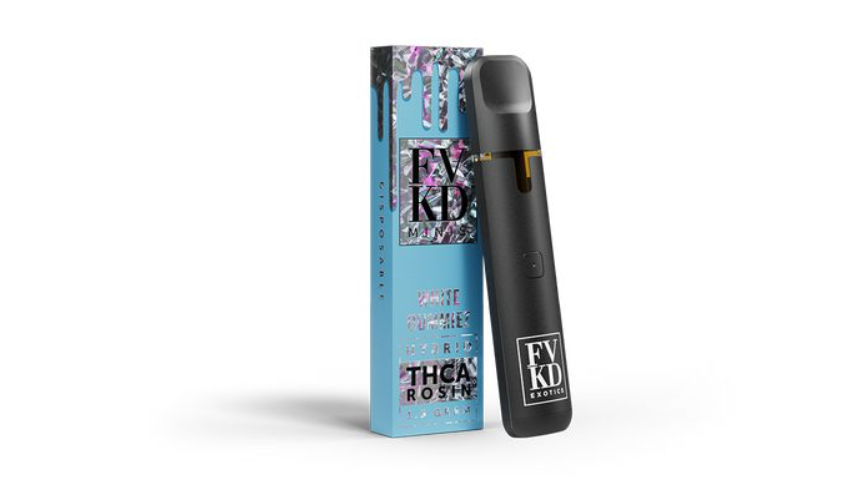
Understanding THCa Rosin Disposable Formats
Product names sometimes combine a strain or flavor reference with technical terms describing a concentrate or device. Understanding each part separately helps prevent confusion.
The phrase fvkd minis thca rosin disposable brings together a brand-associated format, a cannabinoid reference, a concentrate category, and a disposable device description. However, the wording alone cannot verify the exact formulation, cannabinoid concentration, extraction method, battery specifications, or intended use of an individual product.
What THCa and Live Rosin Mean
THCa stands for tetrahydrocannabinolic acid, a cannabinoid found in cannabis. When exposed to sufficient heat, THCa can convert into delta-9 THC, the compound primarily associated with cannabis intoxication.
Live rosin generally refers to a concentrate made using mechanical separation methods rather than chemical solvents during extraction, often from material preserved to retain its original characteristics.
These terms describe aspects of a product, but they do not independently prove its purity, potency, or safety. Consumers should consult the specific product label and supporting documentation for details.
Why Mini Device Formats Need Individual Evaluation
A mini disposable may have a more compact design than a larger device, but size alone cannot establish its performance, reliability, or safety.
Battery capacity, reservoir size, heating components, and operating instructions may vary by model. Consumers should verify these specifications rather than assuming that every compact device has the same features.
Disposable devices also contain electronic components that require appropriate end-of-life handling. Follow the manufacturer’s disposal guidance and check local electronic-waste or battery collection rules.
A Practical Checklist for Product Transparency
Product labels and supporting documents provide more useful evidence than a memorable name alone. When evaluating a cannabis-derived product, check whether the available information includes:
- Ingredients: The stated formulation and any additional components.
- Cannabinoid measurements: Reported THCa, THC, CBD, or other relevant measurements.
- Batch identification: Information that connects the product with supporting records.
- Laboratory testing: The laboratory’s identity and the substances included in the testing panel.
- Device instructions: Charging, storage, operating, and disposal guidance where applicable.
- Safety warnings: Relevant health information and legal restrictions.
A certificate of analysis, or COA, may document cannabinoid measurements and screening for selected contaminants. Its usefulness depends on the testing scope, laboratory credibility, and whether the report corresponds to the specific product or batch.
Testing has limitations. A favorable report cannot establish that inhaling a cannabis product is harmless, and not every report assesses every potential hazard.
Responsible Product Evaluation
Candy-inspired branding can make a product recognizable, but responsible evaluation requires attention to its actual composition, available testing, and intended use.
Cannabis products may carry health risks. THC can affect attention, memory, coordination, and judgment. Do not drive or operate machinery while impaired, and keep products securely away from children and pets.
People who are pregnant or breastfeeding, have relevant medical conditions, or take medications that may interact with cannabinoids should consult a qualified healthcare professional before considering cannabis-derived products. Consumers should also verify applicable laws and age restrictions before purchasing or possessing these items.
Conclusion
Candy-inspired names help cannabis products stand out through familiar associations and memorable wording, but they cannot independently verify ingredients, potency, or effects. FVKD Exotics products should be evaluated through clear labeling, relevant laboratory documentation, and manufacturer instructions. Understanding THCa rosin terminology and mini device formats helps adults distinguish branding from product specifications. A careful approach also accounts for health risks, battery handling, and local regulations rather than relying on marketing language alone.
Disclaimer: For adults 21+ only, where legally permitted. Cannabis products may carry health risks. This article is informational only and is not medical or legal advice.